Our early childhood development practitioner course at Wheelset Academy gives learners the knowledge, practical skills, and workplace experience needed to support young children in safe, inclusive, and engaging learning environments.
This Early Childhood Development Practitioner course gives learners more than theory. Instead, it builds real workplace skills for child-centred learning, programme planning, assessment, administration, and child well-being. Moreover, the curriculum focuses on inclusive practice, play-based learning, and holistic child development.
At Wheelset Academy, we aim to prepare learners for real opportunities in the early childhood development sector. Because the programme includes practical skill modules and work experience modules, learners can build job-ready confidence while developing professional standards. In the same way, the course supports learners who want a strong foundation in ECD training and early childhood development practice.
By the end of this Early Childhood Development Practitioner course, learners should be able to:
Plan and prepare inclusive early childhood activities and routines
Facilitate and mediate active learning for young children
Observe, assess, record, and report each child’s progress
Support children’s health, nutrition, safety, and protection
Build positive relationships with parents and service providers
Maintain administrative systems in early childhood settings
Promote holistic child development in safe, engaging environments
View the full Early Childhood Development Practitioner course price, including
application, registration, POE, and flexible payment options.
Yes, our Learning and Development Practitioner Course is aligned with the South African National Yes, our Early Childhood Development Practitioner course is aligned with the occupational curriculum structure reflected in the uploaded curriculum document.
To enrol for this Early Childhood Development Practitioner course, learners must have:
Full course fee or range Payment plan options Special discounts
On completion, learners receive a Letter of Competence from Wheelset Academy and, once verified, a Certificate of Competence with a Statement of Results from the QCTO.
Full course fee or range Payment plan options Special discounts
The course is taught in English through interactive methods such as lectures, discussions, case studies, videos, and assessments. Study options include classroom, blended online, or on-site training.
Graduates of the Early Childhood Development Practitioner course can pursue roles in:

This module introduces the ECD sector, its history, key concepts, essential services, legislation, policy frameworks, and the roles of stakeholders in early childhood development.
This module builds understanding of child development theories, stages of growth, early learning needs, and the factors that shape development from conception to school-going age.
This module covers child health, nutrition, safety, protection, hygiene, and well-being. It also supports safe practice in early childhood development environments.
Learners practise facilitating active learning, supporting holistic development, and using suitable methods to guide children through meaningful early learning activities.
This module gives learners practical experience in observation, assessment, record-keeping, and progress reporting based on each child’s age and developmental stage.
This module helps learners develop strong communication and partnership skills for working with parents, caregivers, and other child support professionals.
Learners gain workplace experience in planning and preparing learning programmes and daily routines in early childhood settings.
This module gives learners workplace exposure to facilitating and mediating learning in a variety of ECD contexts and environments.
EXCELLENTTrustindex verifies that the original source of the review is Google. The experience was great. The facilitators make sure you understand how the machine operates. And they take you through every step of the wayTrustindex verifies that the original source of the review is Google. I had a good experience with the academy. Friendly staff and it went smoothTrustindex verifies that the original source of the review is Google. They have given excellent training with patient facilitation of teaching and giving advice calmly when you make a mistake so that you don’t panic. Overall they have great customer experience as they are quick to answer all the questions you might have on a course or any information you might need.Trustindex verifies that the original source of the review is Google. Trustindex verifies that the original source of the review is Google. Excellent serviceTrustindex verifies that the original source of the review is Google. Trustindex verifies that the original source of the review is Google. I’m happy I got my ADT Dump truck Certificate, the training was great.
Owner's reply
Great work! You’ve earned itShowing our latest reviewsVerified by TrustindexTrustindex verified badge is the Universal Symbol of Trust. Only the greatest companies can get the verified badge who has a review score above 4.5, based on customer reviews over the past 12 months. Read more
Have a question? Fill out the form and we’ll get back to you quickly to help you start your Safety Officer course.

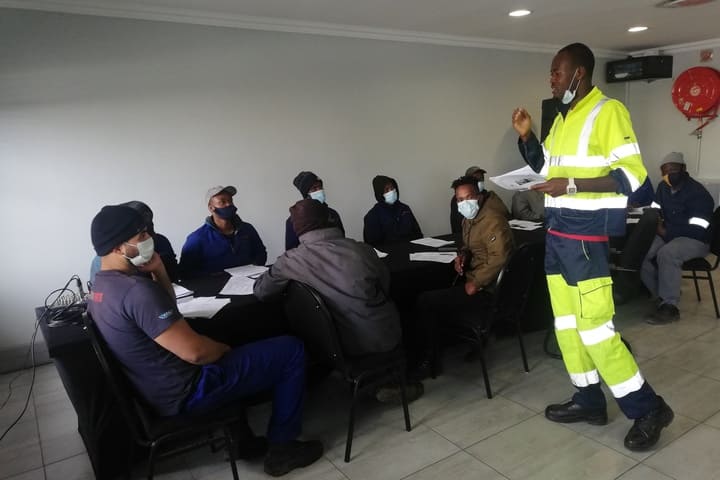

The Early Childhood Development Practitioner Course is an occupational programme that prepares learners to plan early childhood activities, facilitate learning, observe and assess children’s progress, and promote children’s health, safety, and well-being in inclusive learning environments.
This course is suitable for aspiring trainers, facilitators, workplace learning practitioners, skills development staff, and people involved in occupational training support.
To enrol for the Early Childhood Development Practitioner Course, learners need an NQF Level 3 or NCV 3 qualification. This makes the course accessible to many aspiring ECD practitioners who want to build a professional career in early childhood education.
The course includes knowledge modules, practical skill modules, and work experience modules. It covers child development theories, programme planning, active learning facilitation, observation and assessment, health and safety, administration, and working with parents and support structures.
The qualification includes 7 knowledge modules, 6 practical skill modules, and 4 work experience modules. This structure helps learners gain both theoretical knowledge and hands-on workplace experience.
Yes. The Early Childhood Development Practitioner Course includes practical training in planning weekly programmes, preparing inclusive learning environments, facilitating adult-directed and child-initiated activities, assessing children’s progress, and supporting health, safety, nutrition, and well-being.
Learners develop skills in child development, inclusive teaching, play-based learning, assessment and reporting, classroom and routine planning, communication with parents, administration, and child health and safety support.
Yes. The qualification includes compulsory work experience modules in planning routines, facilitating learning programmes, observing and reporting on children’s development, and promoting health, nutrition, safety, and protection in an ECD setting.
Play-based learning is a major part of the course because it supports children’s holistic development. The curriculum highlights the value of play in early learning, including language development, problem-solving, creativity, movement, social interaction, and life skills.
Yes. The course prepares learners to build collaborative relationships with parents, caregivers, community structures, and support services. It also includes communication, parent involvement, and child support planning as part of the training.
After completing the Early Childhood Development Practitioner Course, learners can pursue roles in ECD centres, daycare centres, preschool settings, community-based programmes, and other child development environments where they support the learning, care, and development of children. This aligns with the curriculum’s occupational purpose for both centre-based and non-centre-based settings.
Wheelset Academy can position this programme as a practical, accredited, and career-focused course with flexible learning support and workplace relevance. The certification wording in the template also places Wheelset Academy in the learner journey.
Copyright © 2026 Wheelset Academy | Empowering Skills for the Future